
Application of Double Integration and Superposition Methods to Restrained Beams
Superposition Method
There are 12 cases listed in the method of superposition for beam deflection.
- Cantilever beam with...
- concentrated load at the free end.
- concentrated load anywhere on the beam.
- uniform load over the entire span.
- triangular load with zero at the free end
- moment load at the free end.
- Simply supported beam with...
- concentrated load at the midspan.
- concentrated load anywhere on the beam span.
- uniform load over the entire span.
- triangular load which is zero at one end and full at the other end.
- triangular load with zero at both ends and full at the midspan.
- moment load at the right support.
- moment load at the left support.
See beam deflection by superposition method for details.
Restrained Beams
Restrained Beams
In addition to the equations of static equilibrium, relations from the geometry of elastic curve are essential to the study of indeterminate beams. Such relations can be obtained from the study of deflection and rotation of beam. This section will focus on two types of indeterminate beams; the propped beams and the fully restrained beams.
- Read more about Restrained Beams
- Log in or register to post comments
Problem 658 | Beam Deflection by Conjugate Beam Method
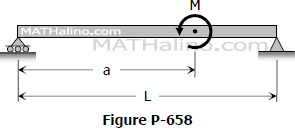
Problem 658
For the beam shown in Fig. P-658, find the value of EIδ at the point of application of the couple.
- Read more about Problem 658 | Beam Deflection by Conjugate Beam Method
- Log in or register to post comments
Problem 657 | Beam Deflection by Conjugate Beam Method
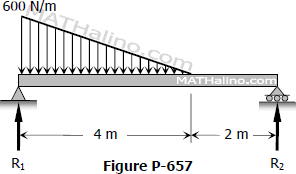
Problem 657
Determine the midspan value of EIδ for the beam shown in Fig. P-657.
- Read more about Problem 657 | Beam Deflection by Conjugate Beam Method
- Log in or register to post comments
Problem 656 | Beam Deflection by Conjugate Beam Method
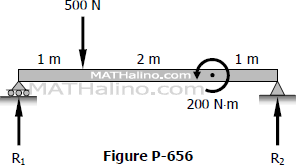
Problem 656
Find the value of EIδ at the point of application of the 200 N·m couple in Fig. P-656.
- Read more about Problem 656 | Beam Deflection by Conjugate Beam Method
- Log in or register to post comments
Problem 655 | Beam Deflection by Conjugate Beam Method
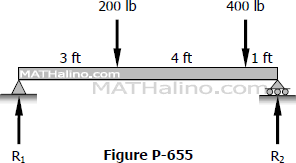
Problem 655
Find the value of EIδ under each concentrated load of the beam shown in Fig. P-655.
Problem 654 | Beam Deflection by Conjugate Beam Method
Problem 654
For the beam in Fig. P-654, find the value of EIδ at 2 ft from R2.
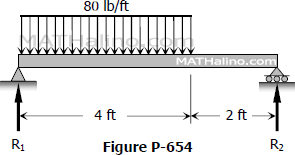
- Read more about Problem 654 | Beam Deflection by Conjugate Beam Method
- Log in or register to post comments
Problem 653 | Beam Deflection by Conjugate Beam Method
Problem 653
Compute the midspan value of EIδ for the beam shown in Fig. P-653. (Hint: Draw the M diagram by parts, starting from midspan toward the ends. Also take advantage of symmetry.
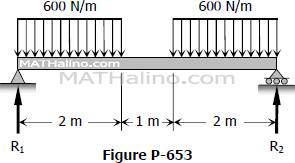
- Read more about Problem 653 | Beam Deflection by Conjugate Beam Method
- Log in or register to post comments
01 - Highest point of projectile as measured from inclined plane
Problem 01
A projectile is fired up the inclined plane at an initial velocity of 15 m/s. The plane is making an angle of 30° from the horizontal. If the projectile was fired at 30° from the incline, compute the maximum height z measured perpendicular to the incline that is reached by the projectile. Neglect air resistance.
Conjugate Beam Method | Beam Deflection
Deflection on real beam = Moment on conjugate beam
Properties of Conjugate Beam
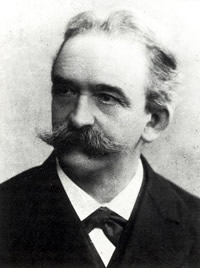
Engr. Christian Otto Mohr
- The length of a conjugate beam is always equal to the length of the actual beam.
- The load on the conjugate beam is the M/EI diagram of the loads on the actual beam.
- Read more about Conjugate Beam Method | Beam Deflection
- Log in or register to post comments
Recent comments
is it not…